
From tests to intent: helping AI understand what legacy software really does
Thursday, 26 November 2026 · Software tracks – time and room to be announced
Speaker
About this session
Legacy software systems contain decades of behavioral knowledge, but much of it is hidden in tests, code and documents that were never designed to explain themselves. When we started the LLM4Legacy project with Philips, our goal seemed straightforward: Migrate legacy tests to behavior-oriented specifications without losing what made them valuable.
Our first approach was deliberately conservative. We relied on deterministic analysis to reconstruct behavior while preserving traceability and execution semantics. The results were reassuring but also revealed an unexpected problem: We preserved too many implementation details and couldn’t raise the abstraction level.
To move away from implementation-level descriptions, we introduced a knowledge graph connecting requirements, tests, code and recovered behavior. This shifted AI’s role from translating artifacts to interpreting them.
In this talk, we follow the project’s journey from deterministic reconstruction to AI-guided behavioral understanding, showing how knowledge graphs can help bridge the gap between legacy software and modern AI-assisted engineering. We’ll share the approach, early observations and the challenges that remain as the project continues to evolve.
About the speaker
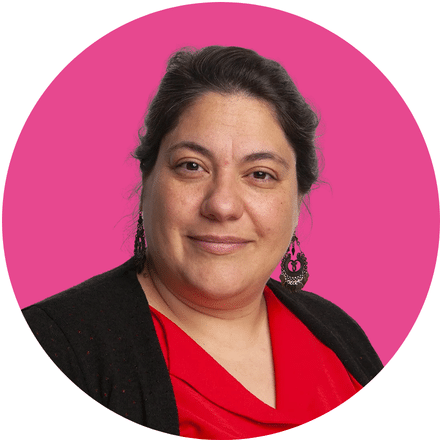
Rosilde Corvino
Rosilde Corvino is an IT professional with experience in embedded-software development and project management. She holds an MSc in electronic engineering from the Politecnico di Torino and a PhD in micro and nanoelectronics from the Université Joseph Fourier of Grenoble. Throughout her career, she’s held technical positions in processor design, compiler design and software development, working for organizations such as INPG and Inria in France and Eindhoven University of Technology, Intel and TNO-ESI in the Netherlands. She has expertise in and has worked on projects using several programming languages, model-based design, domain-specific languages and static analysis. At TNO-ESI, she’s leading research activities to define effective and efficient approaches to deal with software legacy.